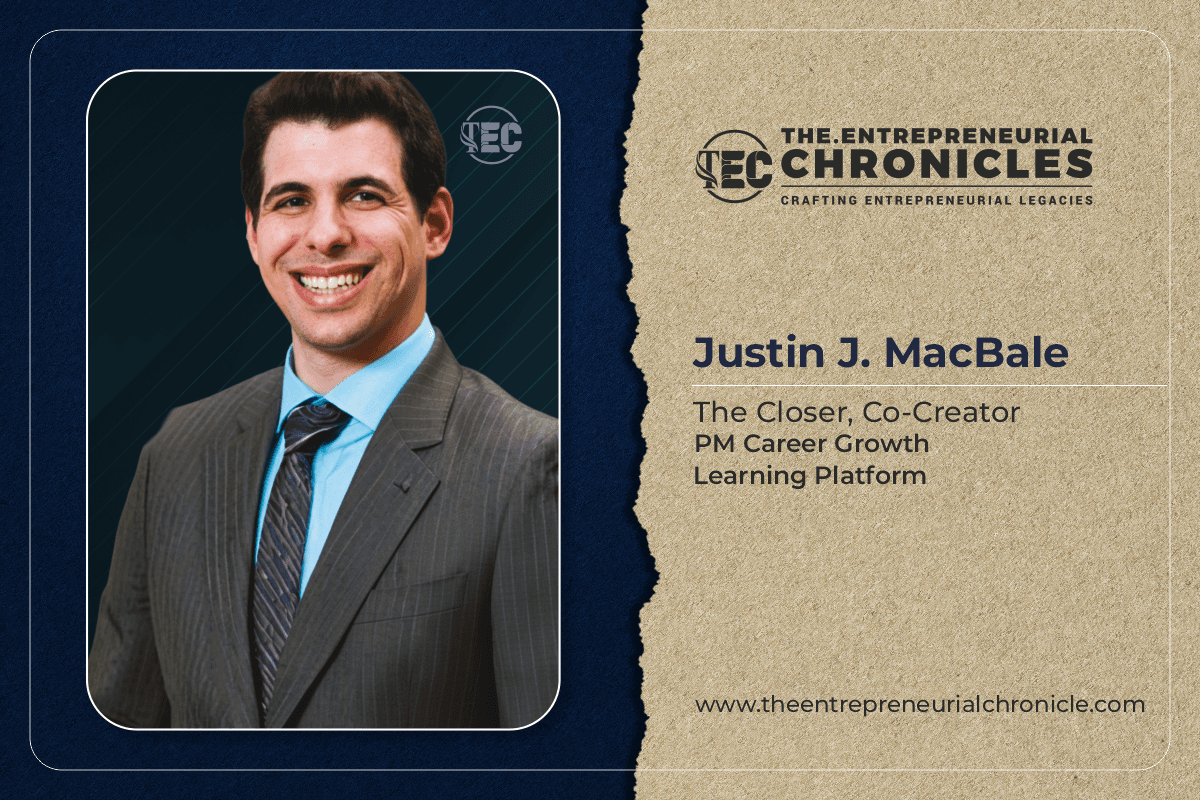
Justin Macbale : The Most Innovative Business Leaders to Watch in 2026
From Task Management to Business Advocacy:
One of Justin’s most significant contributions to the field is his insistence that project leaders must think in financial and strategic terms.
He challenges professionals to move beyond operational metrics and understand the true business impact of their decisions whether it’s margin erosion, capital exposure, or return on investment. At the executive level, credibility is not built through activity reporting, but through value protection.
“The project manager is the eyes and ears of the sponsor,” Justin explains. “If you are not actively working to protect the intended business value, you are not leading, you are supporting.” This distinction is what separates a task manager from a trusted advisor in the eyes of senior leadership.
Navigating Complexity in High-Stakes Environments:
Justin’s experience spans large-scale transformation initiatives, including programs exceeding hundreds of millions in value. These environments are characterized by complexity, competing priorities, and intense scrutiny.
In such scenarios, execution is not just about coordination it is about alignment.
Large programs often fail not due to technical challenges, but because stakeholders operate with conflicting priorities or incomplete understanding of the broader picture.
Justin’s approach focuses on bringing clarity to chaos. He simplifies complexity by connecting individual actions to overarching business objectives, ensuring that every decision contributes to measurable outcomes.
This ability to translate complexity into actionable insight has made him a sought-after leader in post-merger integrations, digital transformations, and enterprise-wide initiatives.
The Hidden Cost of Poor Execution:
One of the most critical insights Justin brings to organizations is the concept of hidden costs in execution. Beyond visible budget overruns, failed initiatives create ripple effects, lost opportunities, damaged relationships, and reduced organizational trust.
He highlights that poorly defined scope, lack of documentation, and weak governance structures often lead to continuous rework and escalating costs.
“When decisions are treated casually, projects become cost sinks,” he warns.
By instilling discipline in governance and decision-making, Justin helps organizations prevent these hidden losses and ensure sustainable outcomes.
Building Platforms for Modern Project Leadership:
Recognizing the gap between traditional project management education and real- world execution, Justin founded Pragintion PM and co-created PM Career Growth.
These platforms are designed to redefine how project professionals are trained and developed. Traditional education, he argues, focuses too heavily on theory and ideal scenarios, failing to prepare professionals for the complexity and ambiguity of real-world environments.
“No project comes with clean answers,” Justin notes.
Instead, his approach emphasizes layered thinking, teaching professionals to navigate political dynamics, understand business interdependencies, and adapt strategies to fit organizational contexts.
By focusing on critical thinking, emotional intelligence, and business acumen, these platforms aim to elevate the role of project management from operational support to strategic leadership.
The Role of AI and the Future of Execution:
As artificial intelligence continues to reshape industries, Justin sees it as both an
opportunity and a challenge for project leaders. AI has the potential to streamline processes and accelerate decision-making, but it also exposes weaknesses in governance and leadership structures.
“AI doesn’t fix broken systems, it reveals them,” he observes.
To remain relevant, project leaders must evolve beyond execution and become strategic partners, capable of integrating technology with business objectives while maintaining control and accountability. This requires a shift in mindset, where speed is balanced with precision and innovation is guided by structure.
Challenging the Obsession with Speed:
In an era where speed is often equated with success, Justin offers a contrarian
perspective. “Moving fast without strategy destroys value,” he states.
He highlights that in complex initiatives, such as mergers, ERP implementations, or large- scale transformations, rushing decisions can lead to costly mistakes, rework, and even legal liabilities.
Instead of prioritizing speed, Justin advocates for intentional execution, where decisions are guided by clear goals, robust governance, and a deep understanding of interdependencies. This disciplined approach ensures that progress is sustainable and aligned with long-term objectives.
Leadership Rooted in Empathy and Understanding:
While much of Justin’s work focuses on strategy and execution, his leadership philosophy is deeply human-centered.
He emphasizes the importance of empathy, communication, and trust in driving successful outcomes. In high-pressure environments, individuals often struggle to balance professional responsibilities with personal challenges. Recognizing this, Justin prioritizes creating environments where people feel heard and supported.
“Understanding how people think and what they’re going through sets you apart instantly,” he explains. By connecting individual concerns to broader objectives, he fosters alignment and collaboration, even in the most complex situations.
Lessons for the Next Generation of Leaders:
For aspiring project professionals, Justin offers straightforward yet powerful advice: start from the ground up. He believes that true leadership comes from understanding every aspect of a business not just at a high level, but in detail.
“Shelve your ego, seek feedback, and act on it,” he advises.
Building credibility, he notes, is not about titles or certifications, it is about consistent follow- through, clear communication, and the ability to deliver results.
By investing time in learning, asking questions, and developing a holistic understanding of business operations, professionals can position themselves as trusted advisors early in their careers.
A Vision for Transformational Impact:
Looking ahead, Justin envisions a future where project leadership is recognized as a strategic function, integral to business success rather than a supporting role.
His work continues to challenge outdated perceptions and redefine what it means to lead in complex environments. Through his initiatives, platforms, and hands-on leadership, Justin is shaping a new generation of professionals who think beyond tasks and focus on value, impact, and sustainability.
Defining a Legacy of Execution Excellence:
For Justin J. MacBale, success is not measured by completed projects, but by the value they deliver.
His legacy is one of transformation not just of organizations, but of the discipline of project management itself. By bridging the gap between execution and strategy, he has demonstrated that effective leadership is not about controlling processes, but about enabling outcomes. In a world where execution often determines success or failure, Justin stands as a testament to the power of clarity, discipline, and purpose-driven leadership. And for organizations navigating uncertainty and complexity, he remains exactly what they need
Leave A Reply
Your email address will not be published.*